
Home >
Buying guides
Hydraulic (Hoyer) Lift Buying Guide
A detailed look at if and how to choose a hydraulic lift
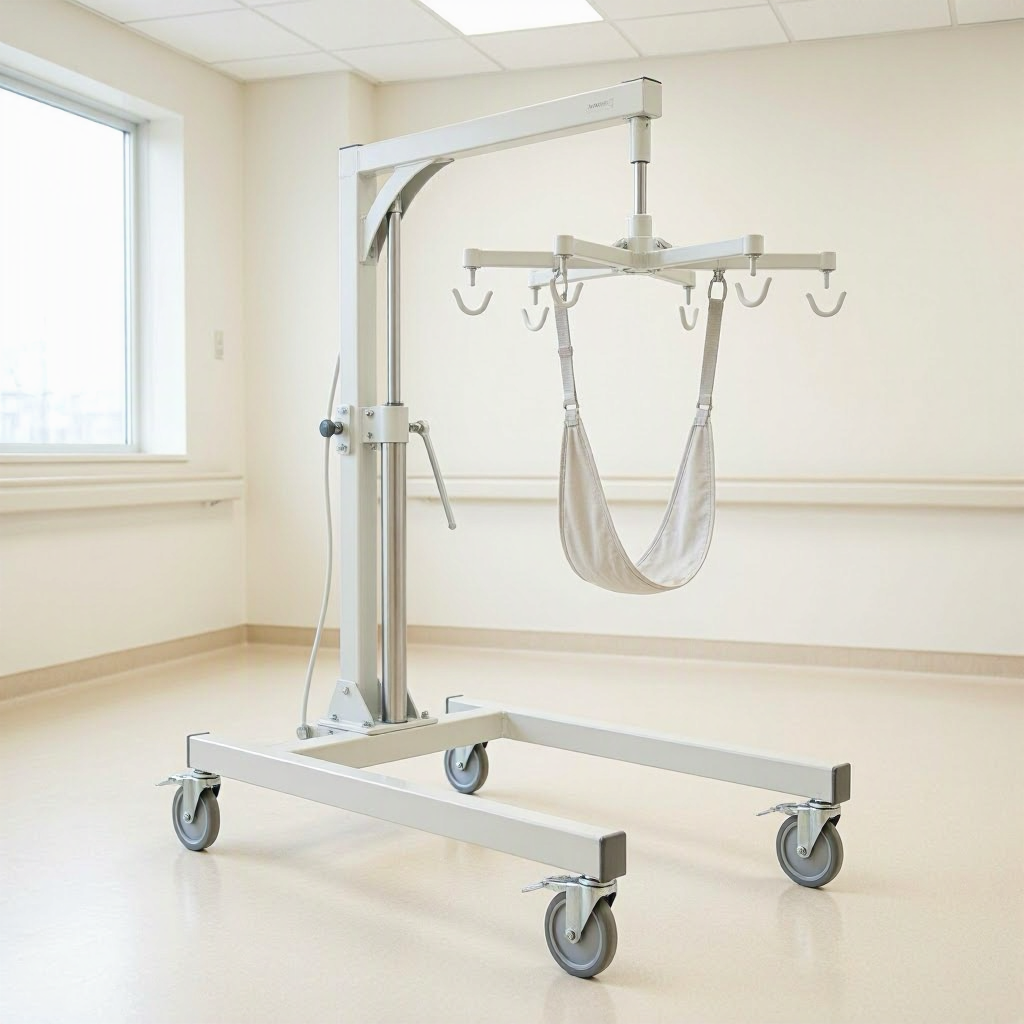
Hydraulic (Hoyer) Lifts for Patients for Home Use by Caregivers
If you are reading this, something has likely changed. A parent who walked into a hospital came home unable to. A spouse you have transferred from chair to bed for months can no longer help with the lift. Or you are thinking three steps ahead — and you want the right answer before you need it.
You are in exactly the right place. This guide is shaped by direct experience caring for an aging parent who needed every one of these products on very short notice, and by ongoing conversations with home health nurses, hospice specialists, and physical therapists who use hydraulic patient lifts every day. We tell you what they tell us — what actually works, what to skip, and what every first-time buyer wishes they had known.
Hoyer Lift is a brand name that people often use to describe any patient lift. Originally made by Hoyer and now part of Joerns Healthcare, the brand became so widely recognized that “Hoyer” is often used generically—similar to “Kleenex” for tissues or “Band-Aid” for adhesive bandages.
When Do You Actually Need a Hydraulic Patient Lift?
A patient lift is not a sign of giving up. It is a sign of planning ahead — for your loved one and for yourself. Most family caregivers wait too long, and the cost is often a back injury, a fall, or a hospital readmission that could have been prevented.
Consider a lift if any of the following are true:
- Your loved one cannot safely stand or pivot from bed to chair, even with two people helping.
- You have caught yourself lifting with your back instead of your legs, or feeling soreness after transfers.
- A fall has happened — or is likely — and you need a way to get someone off the floor without dialing 911.
- Bathing, toileting, or medical appointments are becoming impossible without help you do not have on hand.
- A spouse caregiver is smaller, older, or has back issues, and the patient is the heavier of the two.
If you are nodding, do not wait. The right hydraulic lift can give you back your weekends, your sleep, and your back.
Manual or Electric – The 60 Second Decision?
Every hydraulic patient lift in this review is a manual lift — meaning the caregiver pumps a hand lever to raise the patient, and gravity (controlled by a valve) lowers them. Electric lifts do the same job with a battery-powered motor and a button.
Here is the quick decision framework:
Manual hydraulic is right for you if…
- Transfers happen once or twice a day, not constantly.
- The caregiver has reasonable upper-body strength.
- Budget matters and $500–$700 is the right range.
- You want zero electronics that can fail at 2 a.m.
- Power outages are a concern in your area.
Electric is worth the extra cost if…
- You are doing three or more transfers a day.
- The caregiver is smaller, older, or has back or shoulder problems.
- The patient is on the heavier side — over 200 pounds especially.
- You want one-button operation with no pumping required.
- Your budget allows $1,200–$2,500 for the lift alone.
Want the longer version? See our standalone guide: Manual vs Electric Patient Lifts — A Caregiver’s Decision Guide.
The Sling Matters as Much as the Lift
This is the single most important thing first-time buyers miss: most hydraulic patient lifts ship without a sling. The sling is the fabric harness that actually cradles your loved one. Without it, the lift is just a metal frame.
A few rules to follow:
- Buy a sling that matches the patient’s size — measure shoulder to mid-thigh and check the manufacturer’s size chart.
- Most slings are universal across major lift brands (Hoyer, Invacare, Drive Medical), but a few brands require their own — read the lift’s spec page carefully.
- If your loved one will use the lift for toileting or bathing, choose a sling with a commode opening or mesh fabric that drains.
- Always buy two slings minimum — one in the wash means one ready to use.
- Full-body slings are right for patients who cannot bear weight. U-slings work for patients with some leg strength. Stand-assist slings are a different product entirely.
| 🩺 Clinical Tip If a home health nurse, occupational therapist, or hospital case manager is involved in your loved one’s care, ask them to recommend the sling size before you order. They can save you a return. |
Training: This Part Is Not Optional
A hydraulic patient lift is a powerful piece of equipment, and using it incorrectly can hurt your loved one or you. Before the first real transfer:
- Watch the manufacturer’s video twice — once before assembly, once before the first lift.
- Practice with the empty lift and a folded blanket in the sling to feel the pump action and lowering valve.
- Use two people for the first five to ten transfers — one to operate the lift, one to position your loved one.
- Check that all rear casters are locked before you lift.
- Never leave the patient unattended in the sling, even for a moment.
Most Medicare-covered home health agencies will send a CNA, physical therapist, or occupational therapist to train you in person at no extra cost — ask your doctor for a home safety evaluation if you have not already. It is worth one visit to learn the right grip and the right pace.
| ⚠ Safety First A hydraulic patient lift is not a transportation device. It is designed to lift and lower across short distances — bed to wheelchair, wheelchair to commode. Never use a patient lift to wheel someone around the home over distance, and never go up or down stairs or thresholds with a person in the sling. |